Diagnostics
Confidently use slit lamp, tonometry, and fundoscopy
Case Management
When to treat, when to refer, how to communicate
Integration
Actively position ophthalmology in daily practice
Process – Pilot Phase
| Phase | Content | Duration |
|---|---|---|
| 1 – Analysis | Assessment: equipment, cases, knowledge level | 1 Session |
| 2 – Fundamentals | Diagnostics training with patients | 1–2 Sessions |
| 3 – Advanced | Case management, surgeries, communication, specialist integration | 1–2 Sessions |
| 4 – Integration | Service integration, pricing, internal protocols, next steps | 1 Session |
Results After the Pilot Phase
After 5–6 mentoring sessions, a veterinarian is able to independently diagnose and treat the majority of routine ophthalmological cases. Measurable through internal case numbers, referral rates, and revenue development.
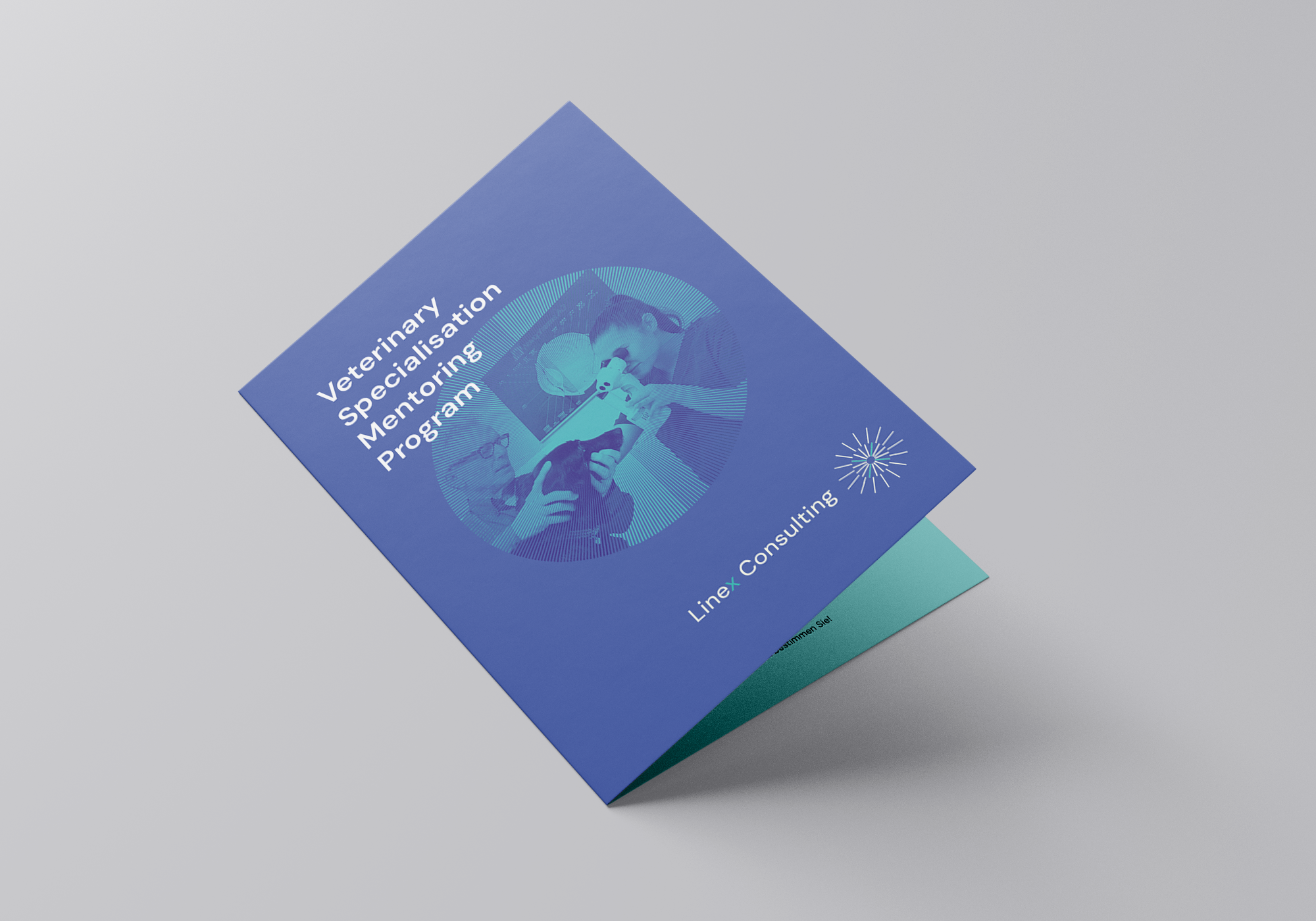
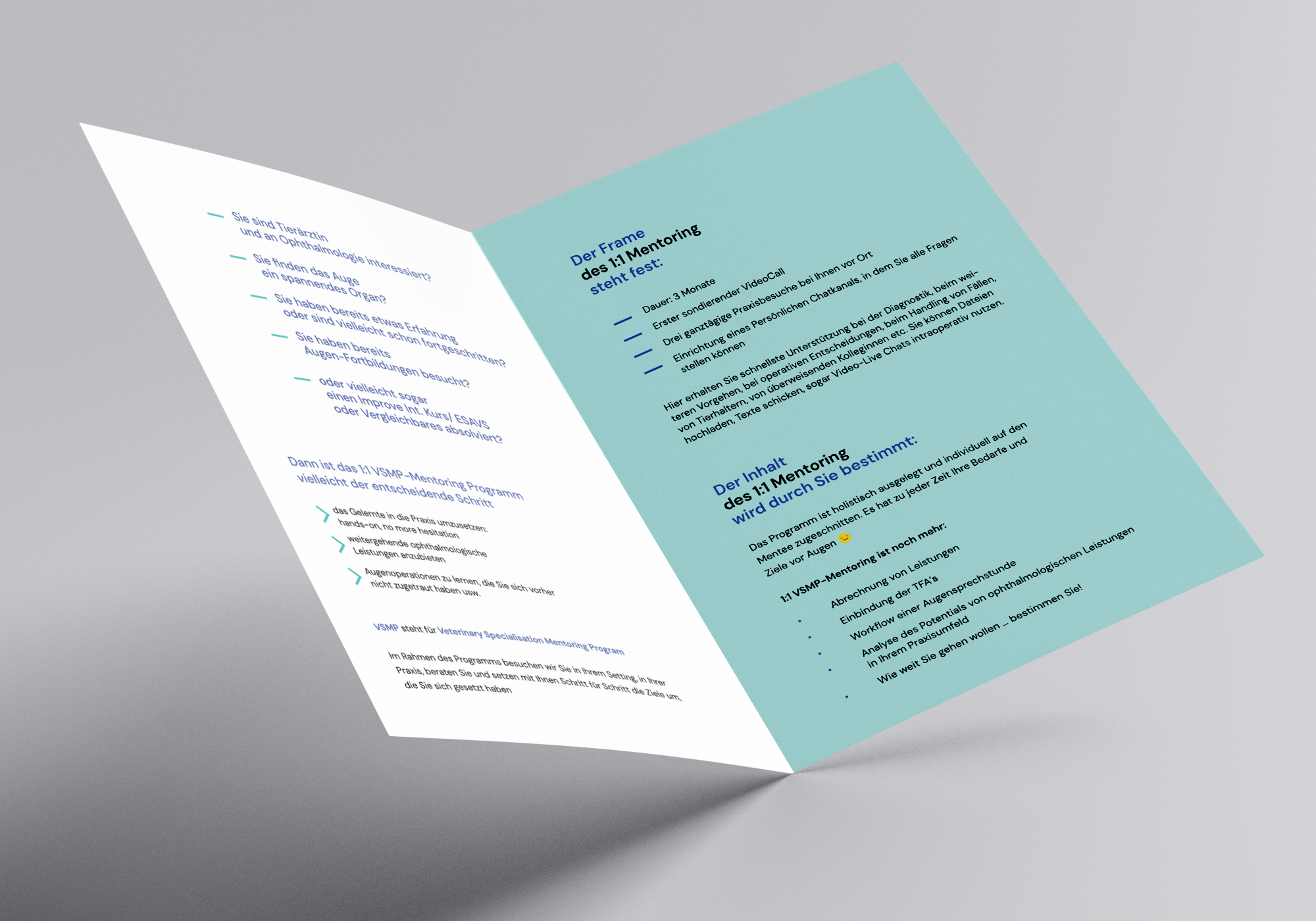
Flyer – 1:1 Mentoring Program
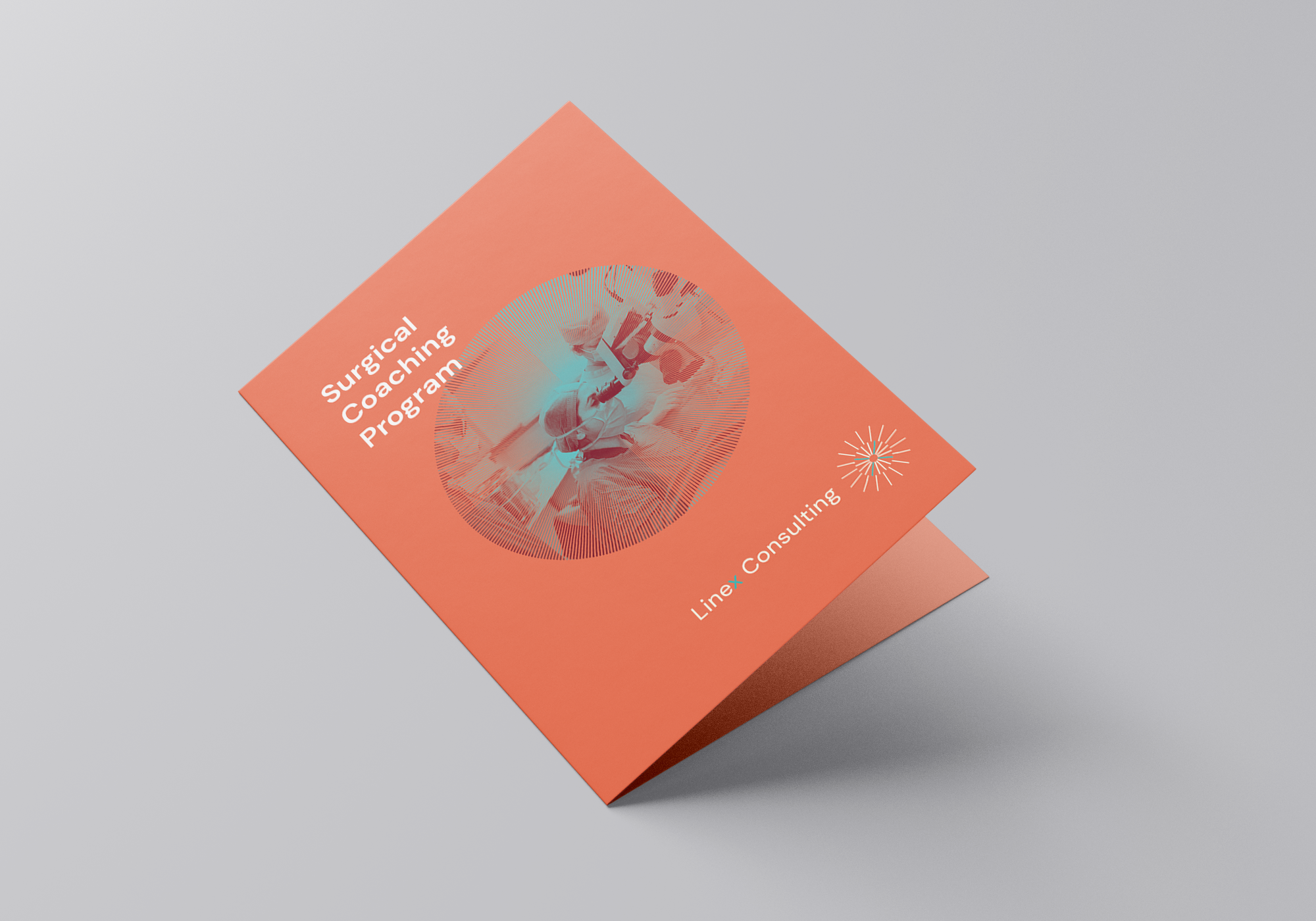
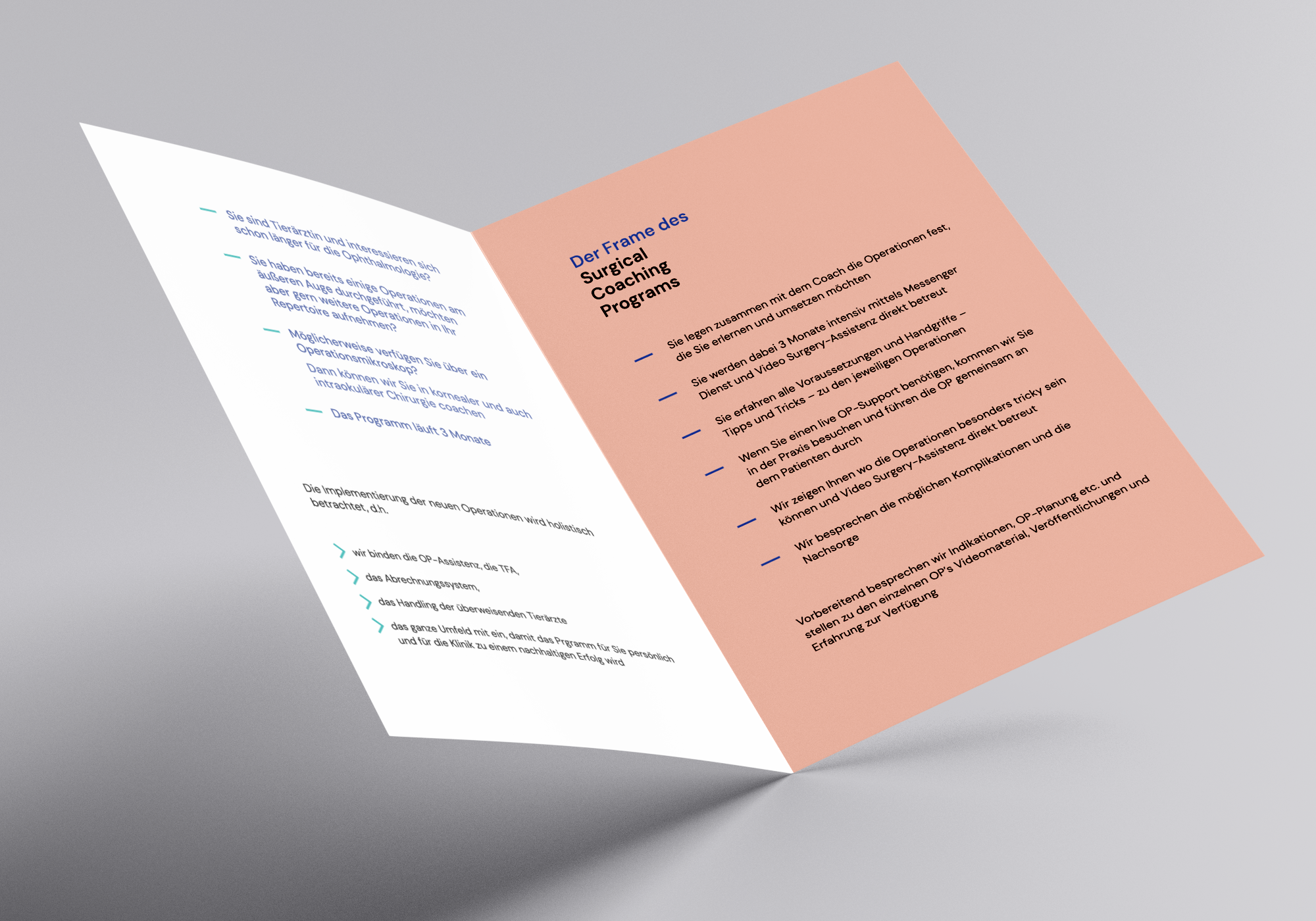
Flyer – Surgical Coaching Program
Interested?
Schedule a non-binding initial consultation and discover how mentoring can advance your practice.